STRATEGIC OVERVIEW
Myanmar's civil war has evolved into a multi-front internal conflict with increasing territorial fragmentation. Since the 2021 military coup, resistance against the ruling junta has intensified, transforming from isolated protests into a coordinated armed struggle involving ethnic militias and newly formed resistance groups.
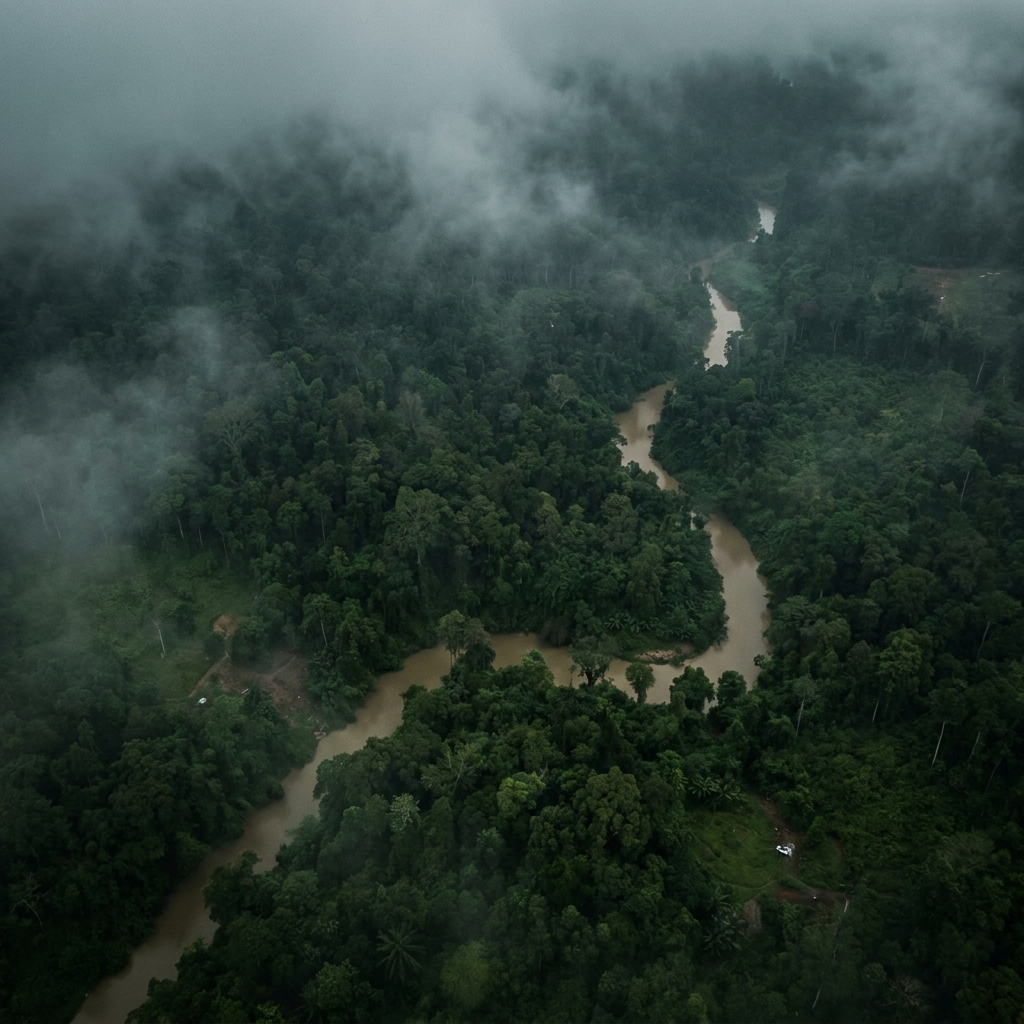
By 2026, the conflict has reached a stage where the central government no longer maintains full control over large portions of the country. Instead, Myanmar resembles a patchwork of contested zones, with shifting frontlines and localized authority structures.
The military junta retains significant firepower, particularly in air capabilities, but faces growing challenges in maintaining control across multiple regions simultaneously. The cumulative effect is a slow erosion of central authority rather than a single decisive collapse.
THREAT VECTOR ANALYSIS
Ethnic Armed Organizations (EAOs)
Long-established ethnic militias have leveraged the current instability to expand their influence. These groups possess established command structures, deep territorial familiarity, and cross-border support networks. Their cooperation with newer resistance movements has materially increased operational effectiveness.
People's Defense Forces (PDFs)
Formed after the coup, PDFs represent decentralized resistance units operating across the country. While less equipped than the military, they rely on:
- Guerrilla tactics adapted to dense terrain.
- Local civilian support networks for shelter and intelligence.
- Improvised weaponry, increasingly including 3D-printed and commercial drones.
Their strength lies in numerical spread and adaptability, rather than centralized coordination.
Air Power Dominance
The Myanmar military's primary advantage is its air force. Airstrikes are used extensively to target resistance-held areas, disrupt supply lines, and intimidate civilian populations. This creates a significant asymmetry in firepower that resistance groups have not yet been able to neutralize.
Humanitarian and Civilian Impact
The conflict has led to large-scale displacement, infrastructure destruction, and limited humanitarian access. These factors further destabilize the country and complicate any conflict-resolution effort that depends on functioning institutions.
MILITARY POSTURE
The junta maintains centralized command, heavy weaponry, and air superiority. However, its weaknesses include:
- Overextension across multiple fronts simultaneously.
- Declining troop morale and reports of recruitment shortfalls.
- Increasing desertions and defections to resistance forces.
Opposition forces, while fragmented, benefit from localized control, flexible tactics, and growing coordination in some regions. The result is a stalemate characterized by asymmetric warfare — neither side capable of decisive victory under current conditions.
OUTLOOK
Myanmar is likely to experience a prolonged civil war with no immediate resolution. Key developments to monitor:
- Increased coordination among resistance groups.
- Potential external involvement or sanctions pressure.
- Expansion of contested areas and the emergence of de facto rebel administrations.
- Humanitarian crisis escalation, particularly in border regions.
A negotiated settlement remains unlikely without significant shifts in the military balance or sustained international political pressure.
"Myanmar's conflict is transitioning from a coup aftermath into a full-scale state fragmentation scenario. The longer the war continues, the more entrenched parallel power structures will become, making reunification increasingly difficult." — Based on UN, Human Rights Watch, Reuters, and BBC reporting.
OUTLOOK SUMMARY
The most useful frame for Myanmar in 2026 is not "civil war" but state fragmentation. Whether or not the junta nominally remains in Naypyidaw, the country is increasingly governed in parallel by ethnic administrations, resistance councils, and contested local authorities. Any serious post-conflict planning will have to grapple with that fragmentation rather than assume a single restored center.
FREQUENTLY ASKED QUESTIONS
What is the current situation in Myanmar's civil war?
Myanmar remains in a fragmented conflict, with multiple armed groups opposing the military government across various regions.
Which groups are fighting the military junta?
A mix of ethnic armed organizations and resistance groups are engaged in ongoing conflict with the military.
Why has the conflict intensified in recent years?
Political instability, military actions, and resistance mobilization have escalated the conflict.
How is the war affecting regional stability?
The conflict contributes to refugee flows, border tensions, and broader regional instability.
Which regions are outside government control?
Several border regions and rural areas remain contested or under partial control of armed groups.
What are the prospects for a political resolution?
A near-term political resolution appears unlikely due to entrenched positions and ongoing fighting.
AUTHOR
Kasim Kasimoglu is a geopolitical and military systems analyst focusing on conventional warfare, force posture, and nuclear deterrence. His analysis integrates open-source intelligence with structured military assessment frameworks, drawing on reporting from the Institute for the Study of War (ISW), the International Institute for Strategic Studies (IISS), and national defense ministries. His work centers on state-level conflicts across Europe and the Indo-Pacific, with an emphasis on operational dynamics and strategic balance.
Read more about the WarWatch editorial team on the About page.
SOURCES AND REFERENCES
- ACLED (Conflict Data)
- United Nations OCHA
- International Crisis Group (ICG)
- Reuters – Africa
- BBC News Africa
TRACK SOUTHEAST ASIA SECURITY DEVELOPMENTS IN REAL TIME
⊙ OPEN LIVE MAP