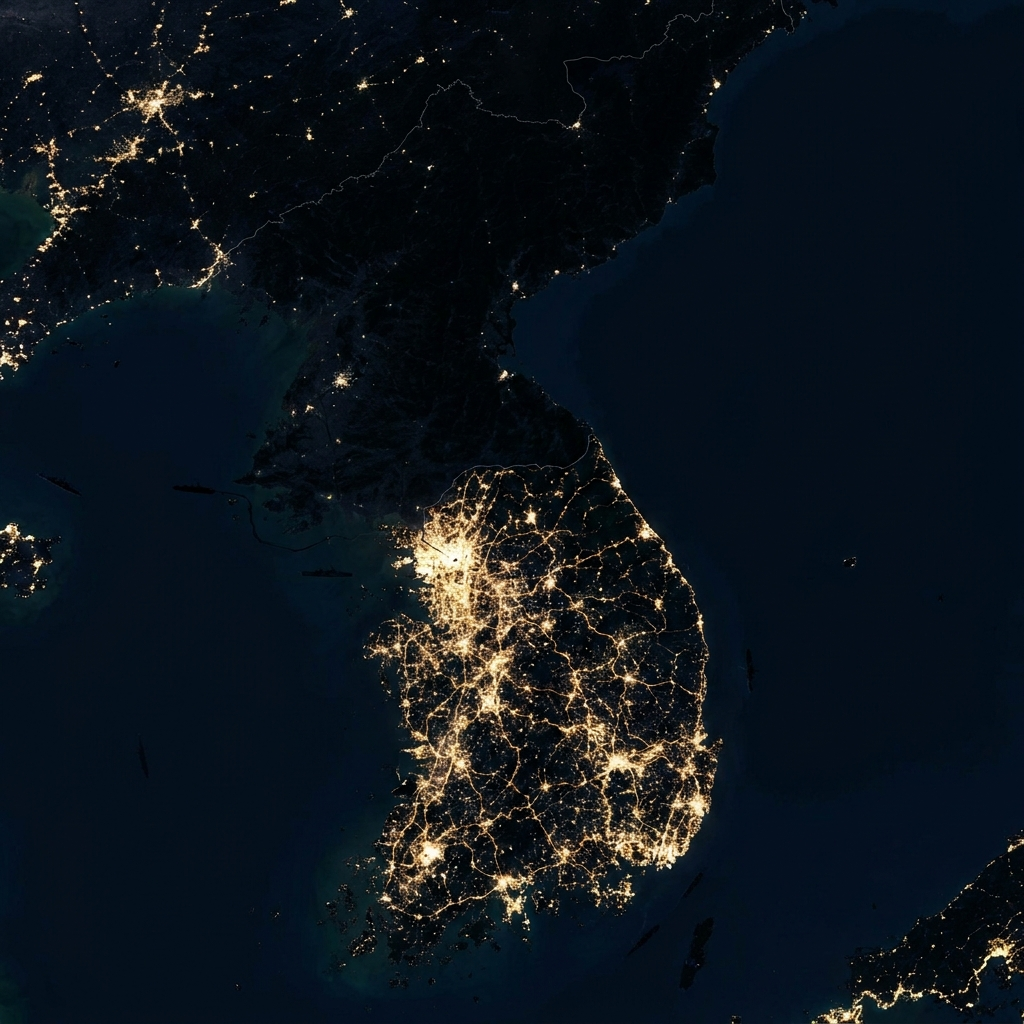
STRATEGIC OVERVIEW
North Korea's missile program in 2026 reflects a transition from experimental deterrence to credible operational nuclear force projection. Unlike previous years focused primarily on testing, current developments indicate a shift toward deployment readiness and doctrinal integration of nuclear weapons across multiple range bands.
Recent intelligence assessments highlight that Pyongyang is not only expanding its missile inventory but also embedding battlefield nuclear options into its military doctrine. This evolution suggests a strategic objective beyond simple deterrence: coercive leverage over regional adversaries and the gradual normalization of North Korea as a de facto nuclear state on the international stage.
The result is a more capable, more diversified, and more politically confident missile force — one that complicates the security calculus of South Korea, Japan, and the United States simultaneously.
THREAT VECTOR ANALYSIS
Intercontinental Strike Capability
North Korea continues refining ICBMs capable of reaching the continental United States. The transition to solid-fuel propulsion is the single most significant operational change: it sharply reduces launch preparation time, complicates pre-emptive detection, and makes interception planning substantially harder for missile defense systems.
Tactical Nuclear Systems
Short-range ballistic missiles are increasingly configured for battlefield use. This lowers the nuclear threshold in regional conflicts, with implications particularly for South Korea and Japan. Tactical employment doctrine signals that Pyongyang views nuclear weapons not solely as a strategic deterrent but as usable instruments in a limited military exchange.
Cruise Missile Expansion
Recent cruise missile developments emphasize low-altitude flight paths designed to evade radar coverage and missile defense interceptors. Combined with reported nuclear-capable variants, the program adds a credible second strike layer that does not depend on ballistic trajectories.
Hybrid Warfare Integration
Cyber operations and illicit financing — including significant cryptocurrency theft attributed to state-affiliated groups — are now directly linked to sustaining missile development. The program's resilience against sanctions is partly a function of these non-military revenue streams.
MILITARY POSTURE
North Korea's force posture emphasizes mobility, survivability, and rapid launch capability:
- Road-mobile launchers increase unpredictability and complicate counterforce targeting.
- Underground facilities enhance survivability against pre-emptive strikes.
- Naval nuclear ambitions are emerging, with reported work on submarine-launched and surface-vessel-launched systems.
Kim Jong Un has explicitly signaled expansion into nuclear-armed naval capabilities, indicating diversification of delivery systems beyond traditional land-based platforms. Simultaneously, recurring missile launches timed against US–South Korea exercises maintain a deliberate cycle of escalation signaling.
OUTLOOK
North Korea's trajectory points toward continued growth in three reinforcing dimensions:
- Production rates — increased manufacturing output across multiple missile families.
- Targeting accuracy — improved guidance and re-entry vehicle technology.
- Hypersonic systems — declared ambitions and reported test activity in glide-vehicle research.
While full-scale conflict on the Korean Peninsula remains unlikely, miscalculation risk is rising, especially during major military drills and over short-notice cycles of provocation and response.
"North Korea's strategy is not built on immediate war, but on long-term coercive stability. The key risk lies in escalation mismanagement, not deliberate aggression." — Based on Reuters, BBC, and 38 North reporting.
OUTLOOK SUMMARY
The Korean Peninsula in 2026 is best characterized as a deterrence-saturated environment where the absence of war is not a sign of stability, but a function of mutual risk awareness. Each successive generation of North Korean missile capability narrows the response options available to Seoul, Tokyo, and Washington, and shifts the strategic balance further from the post-1953 status quo.
FREQUENTLY ASKED QUESTIONS
What is the current status of North Korea's missile program?
North Korea continues to advance its missile program through ongoing testing and system development. Its arsenal now includes a range of platforms from short-range to intercontinental systems.
How advanced are North Korea's nuclear delivery systems?
Improvements in missile range, payload capacity, and reentry vehicle design suggest increasing reliability in delivery capability. However, full operational effectiveness remains difficult to verify.
Why is North Korea increasing missile tests in 2026?
Missile testing serves both technical development and strategic signaling. It reinforces deterrence while demonstrating capability to regional and global actors.
How do missile launches impact regional security?
Each launch increases tensions in Northeast Asia, prompting defensive measures from neighboring states. It also complicates diplomatic efforts and crisis stability.
What types of missiles does North Korea possess?
The country operates a diverse missile inventory, including short-, medium-, and long-range ballistic systems, as well as intercontinental platforms.
Can North Korea strike the US mainland?
Intercontinental missile development suggests the capability exists in principle. However, reliability, targeting accuracy, and operational readiness remain subject to ongoing assessment.
AUTHOR
Kasim Kasimoglu is a geopolitical and military systems analyst focusing on conventional warfare, force posture, and nuclear deterrence. His analysis integrates open-source intelligence with structured military assessment frameworks, drawing on reporting from the Institute for the Study of War (ISW), the International Institute for Strategic Studies (IISS), and national defense ministries. His work centers on state-level conflicts across Europe and the Indo-Pacific, with an emphasis on operational dynamics and strategic balance.
Read more about the WarWatch editorial team on the About page.
SOURCES AND REFERENCES
- Institute for the Study of War (ISW)
- UK Ministry of Defence
- U.S. Department of Defense
- NATO
- International Institute for Strategic Studies (IISS)
TRACK KOREAN PENINSULA DEVELOPMENTS IN REAL TIME
⊙ OPEN LIVE MAP