STRATEGIC OVERVIEW
Following Azerbaijan's full restoration of control over Nagorno-Karabakh, the Armenia–Azerbaijan conflict has entered a post-conflict but highly unstable phase. While large-scale hostilities have subsided, the absence of a comprehensive peace agreement continues to generate persistent tension along newly defined borders.
The geopolitical landscape of the South Caucasus has shifted significantly. Azerbaijan has strengthened its regional position, supported by close ties with Turkey, while Armenia faces internal political pressure and strategic recalibration after its military and territorial losses.
This evolving environment reflects a transition from open warfare to strategic competition shaped by border security, political legitimacy, and regional influence — including the contested question of transit corridors connecting Azerbaijan to its Nakhchivan exclave.
THREAT VECTOR ANALYSIS
Border Tensions and Demarcation Issues
The lack of clearly demarcated borders remains a primary source of friction. Frequent incidents along the frontier include limited troop movements, small-scale clashes, and accusations of territorial violations. These events, while contained, maintain a constant level of instability.
Displacement and Humanitarian Impact
The displacement of ethnic Armenian populations from Karabakh has created a long-term humanitarian and political issue. This factor contributes to domestic pressure within Armenia, international scrutiny, and reduced prospects for genuine reconciliation in the medium term.
Regional Power Dynamics
External actors play a critical role in shaping the post-conflict environment:
- Turkey provides strong political and military support to Azerbaijan.
- Russia's influence has declined but remains relevant via legacy peacekeeping arrangements and economic ties.
- Western actors — particularly the EU and the United States — are increasing diplomatic engagement.
This creates a multi-layered geopolitical environment, complicating resolution efforts.
Infrastructure and Connectivity Corridors
Transport corridors, particularly those linking Azerbaijan to its exclave Nakhchivan, have become strategic priorities. Control and access to these routes represent both economic opportunities and potential flashpoints, especially around the contested concept of a "Zangezur corridor."
MILITARY POSTURE
Azerbaijan maintains a position of military superiority and strategic initiative. Its armed forces have:
- Modernized equipment, including extensive drone capabilities.
- Improved operational coordination tested across two recent campaigns.
- High morale following recent territorial victories.
Armenia, in contrast, is undergoing a period of military restructuring and strategic reassessment. Key characteristics include a defensive posture along borders, efforts to modernize capabilities (with new partners including India and France), and increased reliance on diplomatic channels. Despite the imbalance, neither side appears to seek immediate large-scale conflict — the posture reflects deterrence rather than imminent confrontation.
OUTLOOK
The Armenia–Azerbaijan situation is likely to remain fragile but contained. Key developments to monitor include:
- Progress (or lack thereof) in peace negotiations.
- Border demarcation efforts and any flashpoints they generate.
- Shifts in external actor involvement, particularly Russia–Turkey balance.
- Domestic political changes in Armenia, including potential constitutional reforms.
While a return to full-scale war is not the most likely scenario, localized clashes and periodic escalation remain significant risks.
"The post-Karabakh environment is not a stable peace but a managed post-conflict tension. Azerbaijan holds the advantage, but the absence of a political settlement ensures that the conflict remains unresolved at a structural level." — Based on Reuters, BBC, ICG, and regional security reporting.
OUTLOOK SUMMARY
The South Caucasus in 2026 is being quietly reshaped. Russia's traditional security role has weakened; Turkey is now the most consequential outside actor; and the question of how Armenia integrates — economically and politically — with the West, with Iran, or with the Eurasian system is still open. The Armenia–Azerbaijan file is the visible part of a much larger regional realignment.
FREQUENTLY ASKED QUESTIONS
What is the current situation between Armenia and Azerbaijan?
Tensions remain elevated following recent conflicts, with ongoing military presence along the border. The situation is unstable but below full-scale war.
Is the Nagorno-Karabakh conflict resolved?
While major combat has subsided, underlying political and territorial disputes remain unresolved. This sustains long-term tension.
Why are tensions still high after recent agreements?
Disagreements over border demarcation, security arrangements, and political outcomes continue to drive friction between the sides.
What are the risks of renewed fighting?
Localized clashes could escalate if tensions intensify or agreements fail. The risk remains persistent in volatile areas.
Which border areas are most volatile?
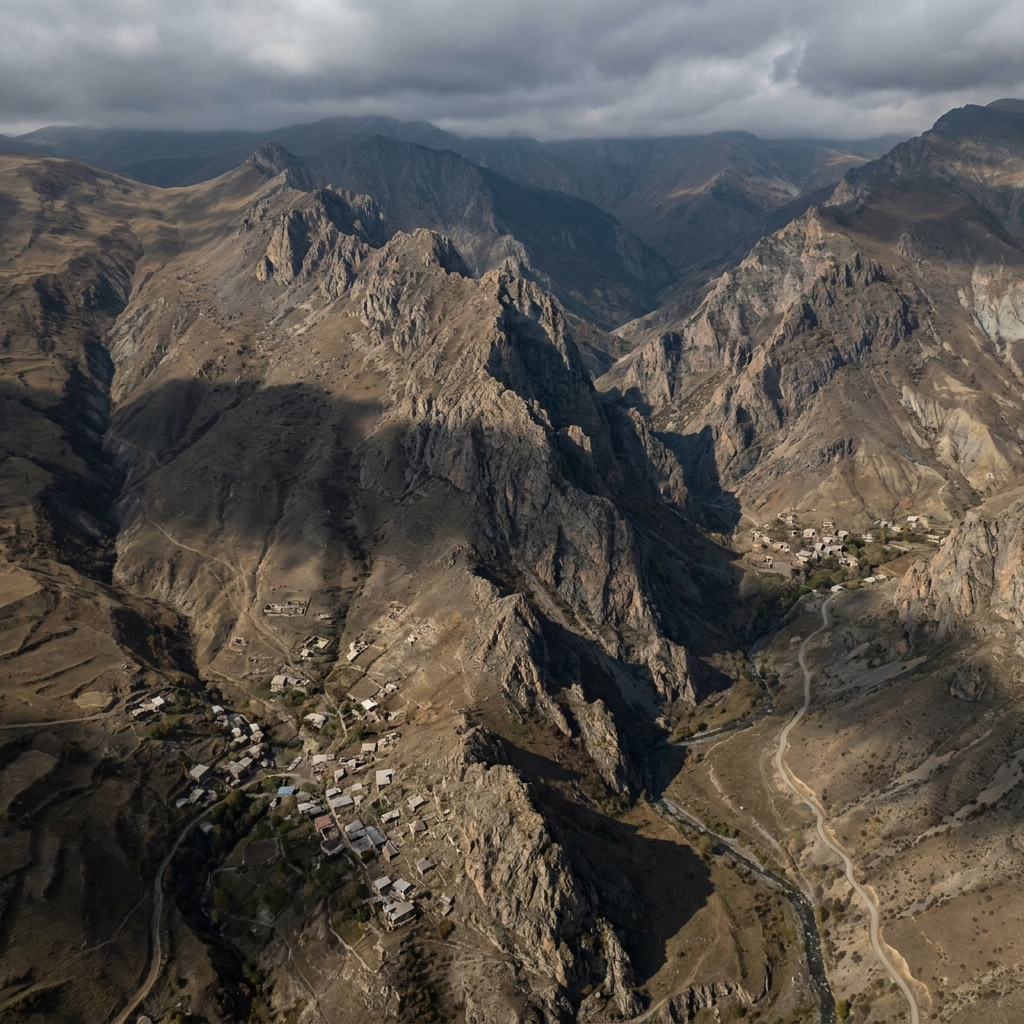
Mountainous and disputed border zones see the highest concentration of military activity. These areas are prone to incidents.
How are external powers influencing the conflict?
Regional actors play a role through diplomacy, security arrangements, and strategic interests. Their involvement shapes the broader balance.
AUTHOR
Kasim Kasimoglu is a geopolitical and military systems analyst focusing on conventional warfare, force posture, and nuclear deterrence. His analysis integrates open-source intelligence with structured military assessment frameworks, drawing on reporting from the Institute for the Study of War (ISW), the International Institute for Strategic Studies (IISS), and national defense ministries. His work centers on state-level conflicts across Europe and the Indo-Pacific, with an emphasis on operational dynamics and strategic balance.
Read more about the WarWatch editorial team on the About page.
SOURCES AND REFERENCES
- Institute for the Study of War (ISW)
- International Institute for Strategic Studies (IISS)
- Reuters
- Associated Press (AP)
- United Nations
TRACK SOUTH CAUCASUS DEVELOPMENTS IN REAL TIME
⊙ OPEN LIVE MAP